
В данном руководстве рассмотрены все аспекты — включая предварительное изучение, выбор оборудования, технику безопасности, эксплуатацию и послепродажное обслуживание — с использованием модульного подхода, адаптированного к различным сценариям, таким как строительство новых парков, реконструкция и модернизация оборудования.
I. Preliminary Assessment (The first step in selection; determines the overall direction)
(1) Precisely defining the target audience and business model
Different demographics require distinct equipment combinations, aligned with the venue’s positioning:
Toddler-Focused Play Center (Target: 2–6 years old; located in residential communities or alongside maternity/baby stores)
Core needs: Safety, gentle play, early childhood development, and parent-child bonding.
Suitable equipment: Fully padded soft-play structures, ball pits, soft climbing elements, cassia seed or “space sand” pits, role-play houses, indoor kiddie rides, small track trains, and mini carousels.
Avoid: High-altitude obstacle courses, professional trampolines, aggressive бамперные автомобили, large competitive arcade games, and high-intensity thrill rides.
Comprehensive Family Play Center (Target: 2–12 years old; typical mall anchor store)
Core needs: Suitability for all ages, diverse gameplay, a balance of fun and interaction, and the ability to retain the whole family.
Suitable equipment: Standard modular soft-play structures, small-to-medium trampoline zones, self-controlled flying rides, “Happy Jellyfish” rides, indoor bumper cars, DIY craft areas, claw machines, and basic physical obstacle courses. Features zoned designs with physical separation between areas for younger and older children.
Trendy Sports & Activity Park (Target: Teenagers 8+ and adults; standalone venues)
Core needs: High energy, fun, “Instagrammable” appeal, and suitability for team-building.
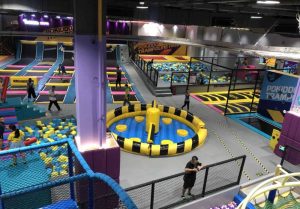
Suitable equipment: Professional trampoline complexes, Velcro walls, foam pits, ninja obstacle courses, indoor climbing walls, competitive arcade games, viral-style swings, and rainbow slides.
Avoid: Soft toys for toddlers, small kiddie rides, and other equipment designed for very young children.
Arcade & Leisure Center (All ages; mall corners or pedestrian streets)
Core needs: Casual entertainment, opportunities for repeat spending, and a quick return on investment.
Suitable equipment: Claw machines, prize-dispensing machines, ticket-redemption games, arcade games (racing, shooting, dance machines), and a small number of mini kiddie rides. Ancillary Play Areas (e.g., playgrounds attached to supermarkets, restaurants, or swimming pools)
Core requirements: Small footprint, ease of management, and low cost.
Suitable equipment: Mini indoor playgrounds, small sand pits, building block areas, and a few coin-operated kiddie rides; avoid large, integrated multi-component structures.
(II) On-site Survey and Parameter Assessment
1. Area Allocation and Equipment Selection Guidelines
Micro-sized venues (under 30 m²)
Space is limited; select only small, standalone equipment and avoid large, complex modular structures.
Recommended: 2–3 kiddie rides, a mini sand pit, tabletop educational game units, and a small building block area. Keep the layout compact while ensuring a passageway width of at least 1 meter.
Small venues (30–80 m²)
Feature a compact, integrated indoor playground as the centerpiece, complemented by smaller standalone items.
Recommended: Basic indoor playground (slide + ball pit + crawl net) + sand pit + claw machine + 1–2 electric kiddie rides.
Medium-sized venues (80–200 m²)
Implement simple functional zoning with clear traffic flow to prevent interference between areas.
Zoning plan: Integrated indoor playground area + electric amusement area + educational/leisure area; small soft-play obstacle courses can be added.
Large venues (200–500 m² and above)
Create distinct zones to establish a comprehensive “one-stop” play center; include rest areas and retail/concession areas.
Zoning plan: Indoor playground area, trampoline zone, physical challenge/obstacle course zone, role-play area, arcade/video game zone, and DIY craft area.
2. Mandatory Requirements: Ceiling Height, Structural Elements (Beams/Columns), and Fire Safety
Ceiling Height Standards
Standard soft-play equipment, kiddie rides, small arcade games: Clear height ≥ 2.8m;
Standard trampolines, modular slides, rotating rides: Clear height ≥ 3.5m;
High-altitude obstacle courses, zip lines, large aerial rides: Clear height ≥ 4m (greater height enhances the user experience). Beams, Columns, and Walls
Mark the locations of columns and load-bearing walls in advance. Equipment must either avoid columns or be fitted with custom soft padding around them to prevent children from bumping into them. Leave a clearance of at least 0.8 meters between the equipment and the walls for maintenance access and passageways.
Fire Safety Regulations (Top Priority)
Fire access routes and emergency exits must never be blocked in the play area. Large, interconnected equipment must not obstruct fire sprinklers, smoke detectors, or emergency lights. Prioritize flame-retardant materials for soft furnishings and decor; verify local fire safety requirements before installation to avoid the need for costly retrofitting later.
3. Flooring and Electrical Requirements
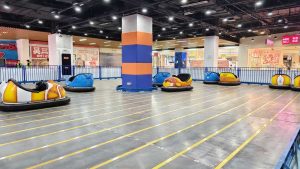
Flooring: Standard tiles or floor coatings are suitable for most equipment. Specialized anti-slip flooring is recommended for trampolines and bumper cars; full-coverage anti-slip mats are recommended for the “Naughty Fort” (indoor soft play) area.
Electrical: Electric equipment, arcade games, and lighting/sound systems require separate wiring. For high-power equipment (e.g., trampolines, large rotating rides), verify voltage and load requirements, and reserve dedicated distribution boxes.
(III) Budget Planning (Product Selection Based on Investment Tier)
Low-Cost Entry-Level (Focus on driving traffic; limited budget)
Prioritize “must-have” popular items; focus on soft play structures and small electromechanical rides while minimizing large custom-made units.
Configuration Example: Basic soft play modules + sand pit + kiddie rides + standard claw machines. Features: Low investment, simple maintenance, short payback period.
Mid-Range Standard Configuration (Mainstream profitable park)
Balances popularity, playability, and opportunities for repeat spending; offers a diverse range of equipment.
Configuration Example: Full standard soft play structure + various small electric rides + simple trampoline area + DIY craft zone + diverse arcade and prize machines.
High-End “Viral” Configuration (Branded, social-media-friendly park)
Allows for custom designs and trendy attractions to create a unique competitive edge.
Configuration Example: Custom-themed soft play structure + professional large-scale trampoline park + immersive role-play area + high-end arcade games + “Instagrammable” attractions (e.g., rainbow slides, bird’s-nest hanging chairs). II. Selection Based on Function (Equipment Specification Details)
Aligning with operational goals, equipment is categorized into four types—traffic drivers, profit generators, experience-focused attractions, and complementary amenities—to be combined according to specific needs.
(1) Traffic Drivers (Essential for attracting crowds and driving foot traffic)
Characteristics: Broad appeal, eye-catching aesthetics, and high recognizability; these serve as the park’s signature attractions and are popular with almost all customer demographics.
Indoor Playground Structures (Soft Play)
Selection Criteria: Prioritize materials; the main frame should use thickened galvanized steel pipes wrapped in high-density EVA foam (odorless and free of sharp edges). Select modules based on the target age group: younger children need ball pits, low slides, and crawl tunnels; older children need climbing elements and obstacle courses. Opt for modular designs to allow for the addition or removal of components later.
Ball Pits
Selection Criteria: Use food-grade PE balls with uniform wall thickness that are crush-resistant and durable. Fence height: 80–100cm is recommended for younger children’s areas to prevent climbing over. Enhance fun by adding slides or “Hot Wheels”-style track features.
Carousels
Selection Criteria: For indoor use, choose mini or small-to-medium models with slow rotation speeds and low noise levels. Ensure soft lighting and music, as well as appropriate spacing between seats. Prioritize silent motors to avoid disturbing others.
(2) Profit Generators (Core revenue drivers; increase average transaction value and repeat visits)
Characteristics: Typically coin-operated or time-based attractions with high repeat-play rates; they serve as the primary source of profit.
Arcade & Prize Games (Claw machines, ticket redemption games, prize vending machines)
Selection Criteria: Choose branded models with stable motherboards and low failure rates. Claw machines should have adjustable grip strength to allow operators to control win rates. Cabinets should be made of sturdy, wear-resistant, and impact-resistant materials. Adjust the number of units based on venue size; shopping mall locations can accommodate more machines.
DIY Crafts & Sand Pits
Selection Criteria: Use dust-free and odorless “space sand” or cassia seeds. Provide a wide variety of molds and tools. For DIY projects, select activities that are simple to execute yet yield attractive results (e.g., painting, clay modeling) to keep labor costs low. Indoor Bumper Cars
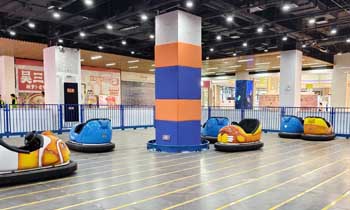
Selection Criteria: Prioritize battery-operated models for indoor use (simple wiring); compact size with moderate speeds; thick, padded cockpits for excellent impact protection; suitable for parent-child rides with controllable play duration.
(III) Experience-Oriented Attractions (Boosting retention and extending playtime)
Features: Highly interactive and active; encourages longer customer stays and improves word-of-mouth reputation.
Trampoline Series
Selection Criteria: Uniform spring tension; high-elasticity, wear-resistant mat material; reinforced frame with secure connections; high-density, resilient foam in foam pits; strong Velcro for “sticky walls” and a full range of suit sizes. Large trampoline areas must be divided into independent zones and equipped with safety barriers.
Physical Challenge Courses & Ninja Obstacle Courses
Selection Criteria: Ropes, rings, and walkways must meet load-bearing standards; rust-proof hardware; difficulty levels tailored to different age groups; safety harnesses and safety nets are mandatory for high-altitude sections.
Self-Control Planes, Happy Jellyfish, Mini Flying Chairs
Selection Criteria: Smooth operation with gentle lifting and rotation rhythms; secure cockpit restraints and safety handles; low-noise motors suitable for prolonged, continuous operation.
(IV) Leisure & Ancillary Amenities (Completing the setting and enhancing the overall experience)
Features: Do not generate direct revenue but improve comfort and boost customer satisfaction.
Includes building block areas, trendy hanging chairs, multi-person swings, cartoon rocking horses, lounge seating, etc.
Selection Criteria: Simple, durable designs with a small footprint; large foam building blocks to prevent accidental ingestion by young children; leisure seating designed for both resting and photo opportunities.
III. Core Selection Criteria (Materials, Safety, Quality, Compliance)
(I) Material Safety (The primary rule for children’s equipment)
Soft Play Equipment (Indoor playgrounds, floor mats, padded elements)
Requirements: Eco-friendly EVA and PU materials; no pungent odors; flame-retardant, non-slip, and wear-resistant; tight seams on padded elements; full, resilient internal padding that does not sag. Reject low-cost products made from recycled waste materials. Plastic Components (Slides, ball pit balls, toys)
Requirements: Food-grade virgin plastic; high toughness; resistant to cracking or whitening from sun exposure or long-term use; smooth surfaces free of burrs.
Metal Frames
Requirements: Steel tubing meets wall-thickness standards; treated with galvanizing or paint for rust prevention; welds ground smooth, free of burrs or sharp corners; overall structure stable and secure, showing no looseness when shaken vigorously.
Fabric/Mesh Components (Crawl tunnels, trampoline mats)
Requirements: High-strength nylon material; high tensile strength and break resistance; mesh aperture sized appropriately to prevent children’s hands or feet from getting stuck.
(II) Safety Design Details
All equipment features rounded corners; no sharp edges or exposed screws;
For climbing or elevated equipment, guardrail heights and safety netting must meet standards to prevent falls;
Electric equipment equipped with emergency stop buttons and comprehensive overload/leakage protection devices;
Soft padding installed at level-change areas and corridor corners;
Age-appropriate zoning; signage indicating height and age limits for high-risk attractions.
(III) Quality and Durability
Prioritize mature, mass-produced models; exercise caution with niche or complex custom designs, as replacement parts may be difficult to source later;
Operational testing: Electric equipment runs without abnormal noise or vibration, with smooth startup and shutdown;
Select durability grade based on foot traffic: Commercial-grade heavy-duty models for high-traffic shopping malls; standard models for smaller community venues.
(IV) Compliance and Certification
Require suppliers to provide the following before purchase: product quality inspection reports, flame-retardancy test reports, and 3C certification for electrical components; ensure large-scale amusement equipment complies with local market regulatory requirements to avoid penalties associated with uncertified equipment.
IV. Supplier and After-Sales Selection (Ensuring Long-Term Operation)
Prioritize manufacturers; exercise caution with middlemen
Direct engagement with manufacturers offers lower prices, greater flexibility for customization and modifications, and efficient communication; middlemen often have slower after-sales response times and significant price markups.
On-site inspection of samples/factories
If feasible, visit the factory or existing partner locations to observe the equipment’s actual performance, workmanship, and wear-and-tear; do not rely solely on promotional images. Clarify After-Sales Terms (Top Priority)
Warranty Period: Standard warranty of 1–2 years for general soft-play equipment; 1+ years for electrical components like motors and circuitry;
Repair Services: Clearly define the scope of on-site repairs, response times, and spare part pricing;
Wear-and-Tear Parts: Discuss procurement channels and pricing for parts prone to wear—such as springs, mesh surfaces, motors, and switches—in advance.
Installation Services
Confirm whether the manufacturer includes free on-site measurement, layout design, installation and commissioning, and on-site operational guidance.
V. Tips on Layout, Operations, and Avoiding Pitfalls
(A) Venue Layout Tips
Separate Active and Quiet Zones: Keep high-energy attractions (trampolines, bumper cars) away from quiet areas (sand pits, DIY zones) to prevent mutual interference;
Ensure Wide Main Aisles: Main aisles should be ≥1.2m wide; aisles in high-traffic play areas should be ≥1m wide;
Distribute Popular Attractions: Avoid clustering all “hit” attractions in one spot; spread them out to encourage customers to explore the entire venue;
Parent-Friendly Perspective: Place rest areas near children’s play zones to facilitate parental supervision.
(B) Cost and Maintenance Considerations
Prioritize Low Maintenance: New operators should avoid equipment with complex structures or excessive parts to minimize daily repair costs;
Ease of Cleaning: Choose equipment with smooth surfaces and minimal seams; this makes daily disinfection and cleaning easier and ensures hygiene compliance;
Noise Control: For venues located on street level or within multi-story buildings, use quiet motors and thickened, shock-absorbing structures to prevent noise complaints.
(C) Avoiding Common Purchasing Pitfalls
Focusing Solely on Low Prices: Cheap equipment often uses recycled materials and thin steel tubing, posing significant safety risks; while it saves money upfront, repair and rectification costs are higher later;
Blindly Following Trends: “Viral” equipment may be popular but can take up excessive space, be difficult to maintain, or appeal to a narrow audience; choose based on your specific customer base;
Ignoring Fire Safety and Site Constraints: Discovering—after purchase—that ceiling heights are insufficient or equipment obstructs fire safety facilities, leading to costly rework;
Cluttering Without Zoning: Simply packing the space with equipment creates chaotic traffic flow, safety hazards, and a poor customer experience. VI. Reference Packages for Different Settings
Neighborhood Shop (Under 50 m²; targeting ages 0–6)
Mini soft play structure + ball pit + space sand pit + 3 ride-on rockers + small building block area
Standard Mall Family Play Center (Approx. 150 m²; targeting ages 2–12)
Standard modular soft play structure + small trampoline area + self-controlled flying ride + indoor bumper cars + claw machines + DIY craft area
Trendy Sports & Activity Center (Over 300 m²; targeting ages 8+ / teens / adults)
Large-scale integrated trampoline zone + Ninja Warrior-style obstacle course + climbing walls + competitive arcade games + viral/social-media-friendly leisure attractions