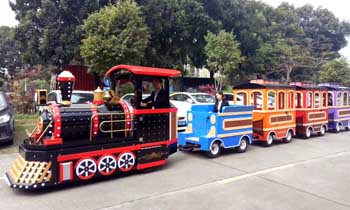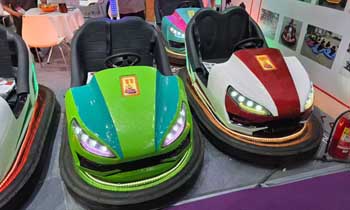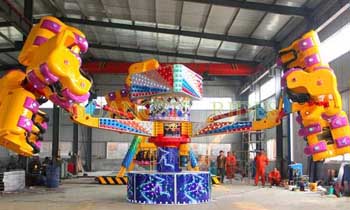
For operators looking to lower initial investment costs, used amusement park rides is certainly an option. However, it is crucial to recognize that while low price is the primary advantage, the biggest risks lie in potential safety hazards and the lack of after-sales support. Before purchasing, the first step is to determine whether the equipment falls under the category of “large-scale amusement rides” subject to state regulation, as this entails complex qualification requirements. For equipment designed specifically for children—such as indoor soft play structures (often called “Naughty Castles”) and carousels—safety standards are extremely high; it is not recommended for newcomers to risk buying second-hand units solely to save money. If, after careful consideration, you decide to proceed with the purchase, professional third-party inspections and rigorous verification of qualifications are steps that absolutely cannot be skipped.
Detailed Analysis: A Comprehensive Guide to the used amusement rides Trade and In-Depth Comparison
Purchasing used amusement park rides requires a systematic understanding of the entire process, from selecting sourcing channels to evaluating value.
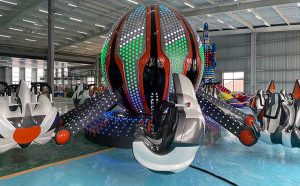
Comparison: New vs. used Amusement Park rides
| Dimension | Brand-new Equipment | used amusement rides |
| Price | High, significant initial investment | Key advantage,low cost |
| Safety | High, meets factory safety standards; certified | High risk,unknown wear and tear; multiple hidden hazards |
| Service Life | Full,at the beginning of its lifecycle | Significantly reduced,remaining lifespan uncertain |
| After-sales Service | Includes manufacturer warranty, installation, and technical support | Usually absent, manufacturer services do not transfer with the equipment |
| Operational Stability | High, relatively low failure rate | Lower, frequent minor malfunctions may disrupt operations |
| Initial Investment Risk | High financial risk, but low equipment-related risk | Low financial risk, but extremely high safety and operational risks |
A Comprehensive Guide to Purchasing used Amusement Park rides
I. Preliminary Planning: Set standards before sourcing equipment to avoid pitfalls
1. Verifying Site Constraints
Measuring Space Dimensions
Accurately measure the site’s length, width, and ceiling height, while allowing for safety buffer zones. Ensure a minimum 1.5-meter safety clearance around rotating or track-based rides, and at least 0.8 meters of overhead clearance for high-altitude attractions. Compare the manufacturer’s original dimension drawings with the actual site to prevent issues such as equipment not fitting or narrow passageways creating safety hazards.
Floor Load-Bearing Capacity and Environment
For indoor sites on the second or third floor, verify the floor’s load-bearing capacity; large mechanical rides are heavy, and insufficient capacity poses a collapse risk. For outdoor sites, consider weather protection (rain and sun); second-hand equipment left exposed to the elements for long periods rusts faster and offers poor long-term value.
Utilities (Water and Electricity)
Large amusement rides typically require 380V industrial power, whereas small soft-play structures and inflatables run on standard 220V household power. Note the transformer capacity and wiring specifications in advance. Water-based attractions require inlet and drainage piping; a lack of existing infrastructure will lead to additional renovation costs.
Matching Target Demographics
Young children (ages 0–6): Prioritize second-hand soft-play structures, small slides, and hand-cranked boats—these offer low-intensity fun and experience minimal wear and tear.
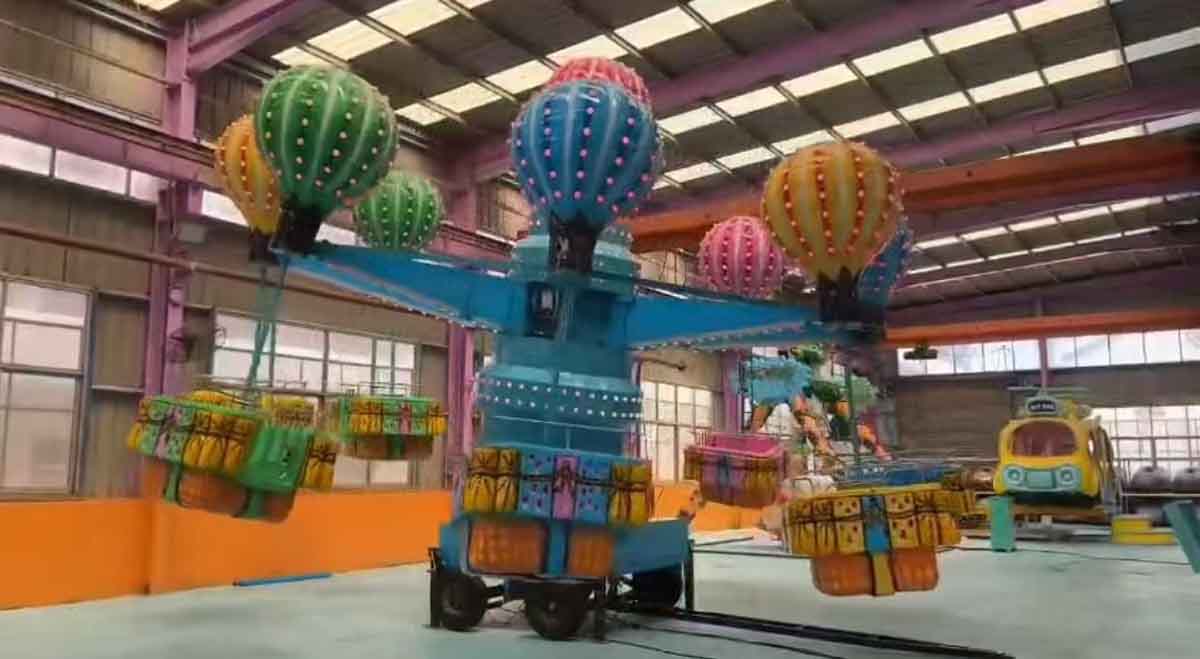
Older children/pre-teens (ages 6–14): Rotating flying chairs, mini pendulum rides, and track trains.
Adults/Family-oriented outdoor activities: Bumper cars, BBQ boats, and sightseeing carriages.
Avoid purchasing cheap equipment that doesn’t suit your target audience; a lack of customer traffic later on effectively means a financial loss.
2. Budgeting and Estimating Hidden Costs
Many buyers focus solely on the purchase price while overlooking additional expenses. The total cost includes: equipment purchase price, dismantling fees, transportation costs, installation and commissioning fees, comprehensive inspection and refurbishment costs, spare parts replacement, third-party safety testing, annual inspection and ownership transfer fees, and site renovation costs.
For the same model, second-hand equipment used for less than a year has low refurbishment costs; however, for mechanical equipment used for over five years, inspection and repair costs can reach up to 30% of the price of a new unit, resulting in lower overall cost-effectiveness.
3. Procurement Standards Based on Equipment Age
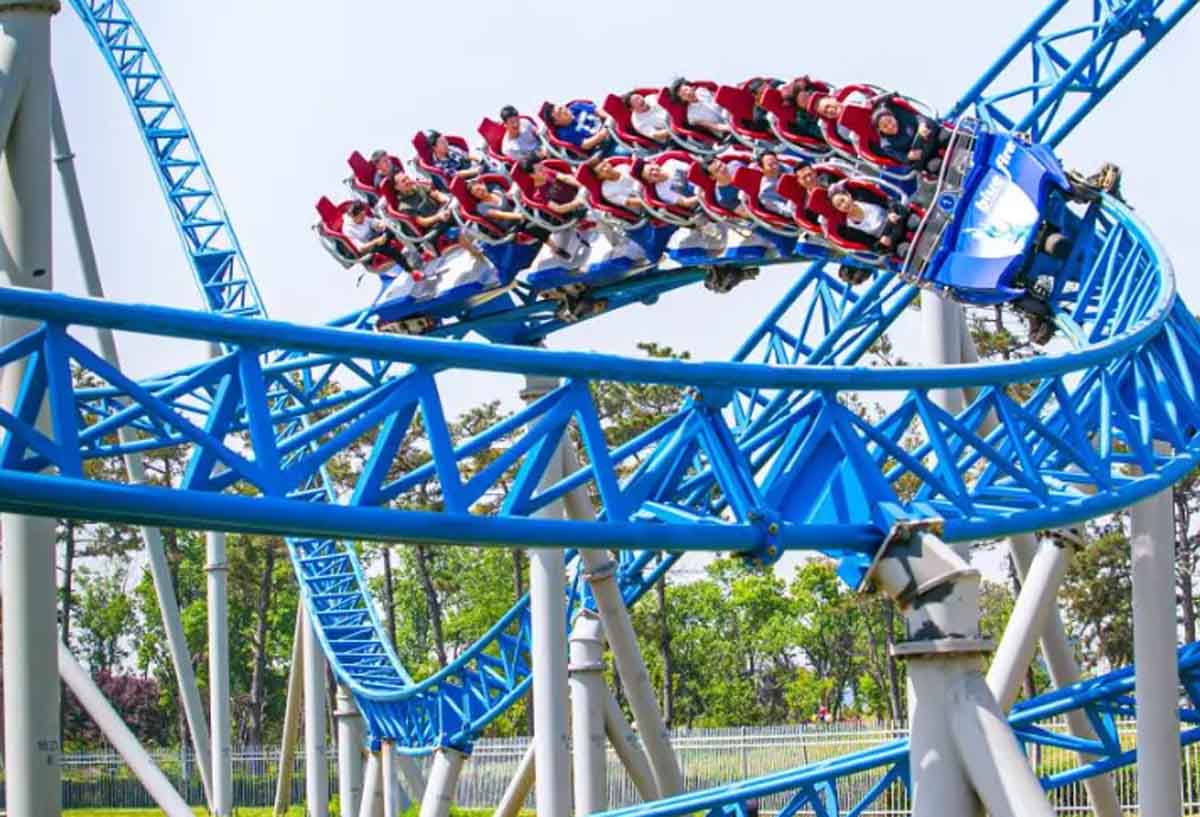
Class A: High-risk special equipment (e.g., Giant Pendulum, Pirate Ship, Ferris Wheel, Dragon Coaster, High-altitude Flying Chairs)
National standards mandate a specific design service life; equipment must be scrapped upon expiration, and purchasing equipment that has exceeded this limit is strictly prohibited.
0–3 years of use: Preferred choice; minimal wear and tear, low consumption of spare parts.
3–5 years: Acceptable, but requires comprehensive rust removal, replacement of all seatbelts, bearings, hydraulic hoses, and motor oil seals, followed by third-party inspection.
Over 5 years: Not recommended for beginners; steel frames suffer from metal fatigue, maintenance is frequent, and passing annual inspections is difficult.
Class B: Medium-sized conventional equipment (e.g., Carousels, Self-controlled Planes, Bumper Cars, Track Trains)
0–3 years is optimal; 3–6 years is acceptable at one’s discretion; over 6 years, frames and transmission gears show severe aging, leading to frequent breakdowns.
Class C: Small non-powered or water-based equipment (e.g., Fiberglass slides, Inflatable castles, Pedal boats, Hand-cranked boats)
Inflatables: Best if used for no more than 2 years, as PVC material naturally ages and leaks air. Fiberglass equipment: Depends on the environment; acceptable within 5 years for indoor use, or 3 years for outdoor use.
Equipment to be rejected immediately
Equipment involved in accidents causing injury; equipment with steel frame structures modified or cut without authorization; equipment lacking nameplates or factory serial numbers; “three-no” products (no manufacturer name, address, or quality certificate) from small workshops; equipment severely corroded from long-term outdoor exposure; equipment penalized for repeatedly failing annual inspections.
4. Verifying the Seller’s True Reason for Transfer
Discuss the reason for the transfer in person and categorize the risk level:
Low risk: Venue upgrading to new equipment, relocation due to lease expiration, or owner changing business lines; equipment has undergone proper routine maintenance with complete records—safe to proceed with inspection.
Medium risk: Declining foot traffic and operating losses; equipment has operated under high loads for extended periods, resulting in significant wear—focus inspection on easily worn parts.
High risk (reject immediately): Frequent breakdowns and repairs; failed annual inspections; history of safety accidents; equipment used as collateral for debt; ownership disputes.
II. Item-by-item verification of qualifications and documentation (essential for business operations; lack of required documents prevents the facility from opening)
1. Complete documentation for special equipment (Class A/B mechanical amusement rides)
All original documents must correspond exactly to the serial numbers on the equipment’s nameplate; photocopies are not accepted:
Original manufacturing license and product certificate of conformity for the complete unit;
Type test report and design document appraisal report (required for registration with the Market Supervision Bureau);
Metal nameplate on the equipment body: must list the model, serial number, date of manufacture, and manufacturer, with the serial number matching the documentation;
Periodic inspection reports from previous years, complete maintenance records, and the pass sticker from the previous year’s annual inspection;
Original operation manual, circuit diagrams, hydraulic system schematics, and original parts list;
Proof of ownership: Seller’s business license and site lease contract (to prove the equipment is owned by the seller and is not leased or mortgaged property);
Transfer documentation: Equipment transfer agreement and commitment to cooperate with the subsequent change-of-user registration at the Market Supervision Bureau.
2. Documentation for non-powered, water-based, and inflatable amusement rides
Certificate of conformity and material safety/environmental test reports (formaldehyde and heavy metal testing required for soft materials and plastics);
Additional checks for inflatable castles: Flame retardancy test report and airtightness test report;
Fiberglass boats and bumper boats: Buoyancy test and load-bearing safety test reports;
Small-scale equipment not classified as “special equipment” does not require annual inspections; however, without test reports, shopping malls and scenic areas will not permit their installation.
3. Essential contract terms: clearly documented in writing to prevent disputes
Comprehensive details: Equipment brand, model, serial number, year of manufacture, and purchase price;
Seller’s guarantee: No history of safety accidents, no liens or encumbrances, no ownership disputes; nameplates and documentation must be authentic and valid;
Maintenance and refurbishment responsibilities: Specify which parts (e.g., safety belts, bearings, tires, hydraulic hoses) must be replaced prior to dismantling, and determine who bears the cost;
Obligation to assist with transfer: Seller must provide all documentation and assist with the equipment registration transfer and annual inspection coordination;
Short-term after-sales warranty: Agree on a 1–3 month warranty for the core motor and steel frame structure (excluding damage caused by misuse);
Breach of contract clauses: In cases of forged documents or concealment of accident history, the seller must provide a full refund and cover losses related to transport and inspection;
Allocation of responsibilities for dismantling, transport, and hoisting; compensation plan for damage.
III. Detailed steps for on-site inspection (photos and videos cannot replace physical inspection)
1. Inspection of overall appearance and steel frame structure
Main steel frame: Carefully examine welds on uprights, the base, and support beams for cracks, deformation, or signs of weld repair; cracked welds indicate a major safety hazard—reject the equipment immediately;
Rust level: Minor surface rust can be sanded and repainted; do not purchase if there is extensive deep rusting, rusted-through areas, or thinning pipe walls that compromise load-bearing capacity; pay special attention to the base, where rust often accumulates due to standing water;
Fiberglass shell and cabins: Check for extensive cracking, peeling repair patches, fading, or chalking; minor scratches can be polished out, but cracks extending through the material pose a risk of structural failure;
Guardrails and safety barriers: Ensure no deformation, breakage, or missing sections; welds must be secure, and gaps must comply with child safety standards to prevent children from getting their hands or feet trapped.
2. Powertrain System (Highest rate of critical failures)
Motor: Run the equipment without a load for 10–20 minutes; listen for abnormal noises, vibrations, or a burning smell; inspect the motor housing for oil leaks or rust caused by water ingress; check the manufacturing date (repairing an aged motor is extremely costly).
Reducer/Gearbox: Check for oil seepage or leakage; ensure smooth operation without sticking or abnormal noise; oil leakage indicates aged seals that require complete replacement.
Chains, Belts, and Drive Bearings: Check for chain elongation, cracking, or lack of lubrication; belt aging, cracking, or slippage; and bearing stiffness or abnormal noise. These are all wear parts; require the seller to install brand-new replacements before purchase.
Hydraulic/Pneumatic Systems (e.g., Pirate Ships, lifting rides): Inspect hoses for aging, cracking, or oil seepage; ensure smooth lifting/lowering without sticking or pressure-loss slippage; check hydraulic cylinders for scratches or oil leaks.
3. Safety and Protection Components (Directly affects annual inspections and personal safety)
Seatbelts and Safety Restraint Bars: Check fabric for wear, broken stitching, or stiffening due to age; ensure buckles lock securely without deformation or looseness; replacing seatbelts older than two years is recommended.
Shock-Absorbing Devices: Ensure springs and rubber shock pads are free from cracks, failure, or detachment; failed shock absorbers cause a bumpy ride and can damage the chassis.
Limit Switches and Emergency Stop Buttons: Test the emergency stop, upper/lower limit switches, and overload protection; the equipment must stop immediately upon activation without malfunction or delay (failure of any safety switch will result in a failed annual inspection).
Anti-slip and Anti-entrapment Protection: Ensure the cockpit floor’s anti-slip surface is intact, gaps are free of sharp metal burrs, and corners feature soft padding.
4. Circuit Control System
Internal control cabinet wiring: Ensure wiring is neat and free from disarray, aging, damaged insulation, short circuits, or scorch marks; check for waterproofing and moisture-proofing measures (outdoor equipment wiring is highly susceptible to aging and short circuits);
Display screens, operation buttons, and indicator lights: Ensure buttons are responsive and free from malfunctions or blank screens; verify that the earth leakage protection device triggers correctly;
Lighting and audio systems: Test all functions; damaged lights or speakers can be replaced later and serve as grounds for price negotiation.
5. Specialized Inspection for Inflatable and Water Equipment
Inflatable castles: Inflate fully and let stand for 2 hours to check for seam leaks or bottom abrasion/holes; ensure flame-retardant fabric is not stiff or crumbling, and that zippers and safety flaps are intact;
Pedal boats and bumper boats: Check hulls for through-cracks or leak repairs; ensure buoyancy chambers are intact, propulsion mechanisms (paddles/pedals) operate smoothly, and sealing plugs show no signs of aging or water seepage.
6. No-load and Loaded Test Runs
Run without load for 30 minutes to observe for vibration, abnormal noise, oil leaks, or pressure loss; if conditions permit, simulate a loaded run using sandbags of equivalent weight to check overall structural stability and ensure lifting/rotation speeds are uniform without drifting or stuttering.
IV. Price Negotiation, Dismantling/Transport, and Final Acceptance
1. Basis for Reasonable Price Negotiation
Older equipment with significant rust or wear offers greater room for price reduction;
Deduct costs item-by-item for missing documentation, damaged accessories, motor oil leaks, rusted steel frames, or extensive casing damage;
Negotiate a lower price if the seller is in a rush to transfer ownership or the site lease is expiring;
Calculate costs for refurbishment, replacement parts, and inspections separately, and deduct them from the total purchase price.
2. Precautions for Dismantling and Transport
Arrange for professional amusement equipment technicians to handle dismantling; strictly prohibit rough cutting of steel frames or forceful removal of wiring to prevent secondary damage;
Individually wrap and protect fragile parts, circuitry, and fiberglass cabins; the seller or logistics provider should bear liability for any damage caused by impacts during transport;
Photograph the equipment’s complete condition before loading to serve as a reference for final acceptance upon delivery.
3. Post-installation acceptance process
Inventory and verify all components to ensure there are no missing parts or impact damage;
Refurbish the unit by removing rust and repainting, and replace all aged safety components;
Conduct a comprehensive overhaul of electrical and hydraulic systems, replacing oil seals, hydraulic hoses, and bearings;
Perform repeated test runs—both unloaded and with passengers—for over two hours to confirm trouble-free operation;
Engage a third-party inspection agency to issue a safety inspection report;
Visit the Market Supervision Bureau to update the equipment user registration and file the annual inspection record; commence operations only after obtaining legal operating authorization.
V. Key points for avoiding long-term operational pitfalls
Establish a regular maintenance log: inspect seatbelts, emergency stop switches, and drive components weekly; service motors and bearings monthly;
Ensure the equipment undergoes the mandatory annual inspection on time; failure to do so—or continuing to use the equipment after the deadline—will result in heavy fines;
Do not make unauthorized modifications to rotation speed, lifting height, or passenger capacity; any such modification will result in an automatic failure of compliance;
Retain all procurement contracts, certificates, inspection reports, and maintenance records for potential verification by regulatory authorities.